

Where to enter the Colosseum: entrance guide, tips and advice
- 8 min read
The Colosseum, an iconic symbol of ancient Rome and a must-see for millions of tourists, invites visitors from all over the world to explore its majestic ruins. However, the question “Colosseum where to enter” is crucial for a seamless visit, since the structure offers multiple access points depending on ticket type and visitor needs. Understanding where to enter ensures efficient navigation and maximizes the time spent inside this historic amphitheater. This guide clarifies the main entry points, ticket-related access, and security processes, thereby enabling visitors to prepare for their journey through one of Rome’s greatest landmarks.

Colosseum, Roman Forum and Palatine Hill Guided Tour + ancient Rome tour
Understanding the main entry points to the Colosseum
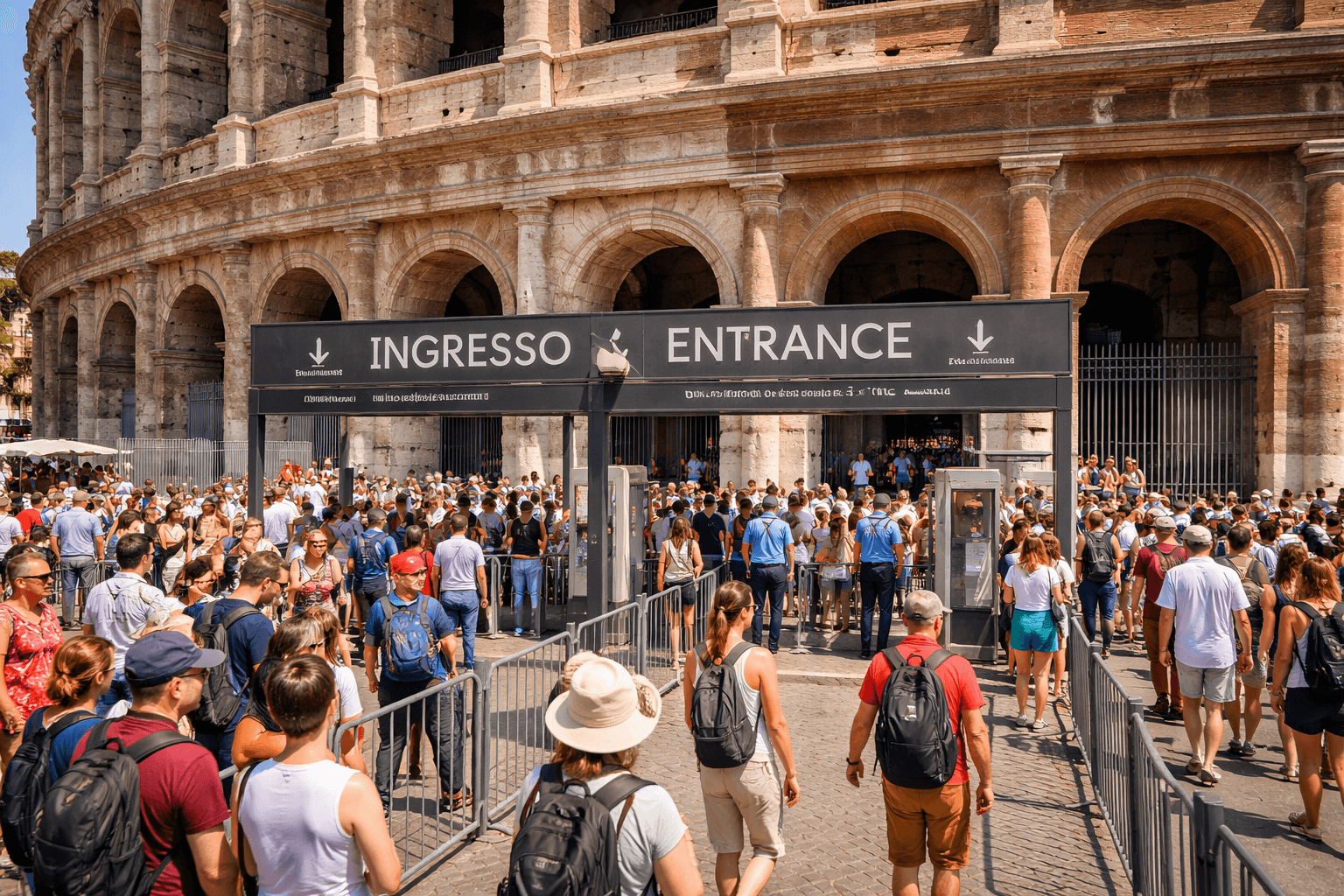
The Colosseum features several main entrances, each designed to accommodate different visitor categories. The primary and most well-known entrance is the main Arch of Constantine gate, located on the south side. This entrance typically serves general admission visitors and those holding standard tickets. It is essential to note that this entrance often experiences long queues, especially during peak tourist seasons, which can add significant waiting time before entry.
In addition to the main entrance, the Colosseum has specific access points for groups and guided tours. These alternative entrances are located near the north and west sections of the amphitheater, allowing organized groups to bypass the main line. Visitors who purchase special tickets, such as underground or arena access, also enter through designated gates that facilitate direct entry to these restricted areas. Understanding these entry points in advance helps avoid confusion and streamlines the visit.
Finally, the entrances are designed not only for functionality but also to preserve the monument’s integrity. For example, the southern entrance maintains the historical flow originally used by spectators, while other gates accommodate modern requirements like security checks. Consequently, knowing the main entry points to the Colosseum is fundamental because it influences the overall experience from arrival to exploration.
How to identify the official Colosseum entrances
Identifying the official entrances to the Colosseum is straightforward when paying attention to specific markers and signs. Official gates are clearly indicated by Roma Capitale signage and staffed by authorized personnel wearing uniforms. Tourists should look for these official signs to avoid unauthorized or unofficial entry points that may be offered by vendors outside. Most importantly, the main entrance is marked by the massive Arch of Constantine nearby, which serves as a prominent landmark.
Visitors can also recognize official entrances by the presence of ticket validation machines and security checkpoints. These checkpoints are mandatory for all visitors and ensure the safety and preservation of the site. Furthermore, electronic ticket scanners are installed at all official gates to confirm ticket authenticity, making these features reliable indicators of the correct entry points.
In addition, official entrances correspond with the layout shown on the Colosseum’s website and official maps distributed at tourist information points. Therefore, checking these resources beforehand helps visitors confirm they are at the right location. In summary, the official entrances are distinct due to signage, staff presence, ticket validation, and security screening, which together guarantee a safe and legal visit.
Ticket types and corresponding colosseum access points
Ticket types for the Colosseum directly determine the entrance visitors should use. Standard tickets grant access through the main southern entrance, which allows entry to the arena floor and the first two levels of the amphitheater. These tickets are the most common and should be booked in advance to avoid long waits at the gate.
For those holding combined tickets or special passes, such as the Colosseum Underground tour or the Palatine Hill and Roman Forum combo, access is usually through a different entrance near the northwest corner of the site. This gate is reserved for visitors with booked guided tours or special access, allowing quicker entry and additional exploration options. Therefore, the ticket type must be carefully reviewed before arriving to ensure entry through the correct gate.
Moreover, Roma Pass and other city tourist cards grant priority access but still require entry through official admission points. Some cards allow skip-the-line privileges, but the entrance corresponds to the ticket’s category, highlighting the importance of confirming the access point. In essence, knowing the ticket type and its corresponding entrance point reduces confusion and improves visitor flow at the Colosseum.
Colosseum, Roman Forum and Palatine Hill Guided Tour + ancient Rome tour
Guided tour entrances versus general admission entries
Guided tour entrances at the Colosseum differ significantly from general admission entries to facilitate organized visits. Tour groups typically enter through a dedicated gate near the northwest side, which is monitored separately from the general admission line. This arrangement helps maintain group cohesion and allows guides to provide immediate context before entering the monument.
Unlike general admission visitors who might wait in long lines, guided tours enjoy prioritized access, which often leads to shorter wait times and a more structured visit. This difference is crucial because it impacts the overall experience, making guided tours an attractive option for those interested in detailed historical narratives and efficient navigation through the Colosseum.
However, the guided tour entrance requires advance booking and ticket confirmation, which ensures that the number of visitors remains manageable. Hence, visitors planning to join a guided tour should prepare by verifying the designated entrance and arrival time. In conclusion, guided tour entrances offer convenience and enhanced storytelling but come with specific entry procedures different from general admission.
Accessibility entrances for visitors with special needs
Accessibility entrances at the Colosseum are specifically designed to accommodate visitors with reduced mobility or other special needs. These entrances are located near the main southern gate but include ramps and elevators that bypass stairs and uneven terrain. This thoughtful design makes the Colosseum more inclusive while preserving the integrity of the ancient structure.
Visitors requiring accessible entry should register or notify the Colosseum’s staff in advance or upon arrival to be directed to the appropriate gate. Staff assistance is available to ensure safety and comfort throughout the visit. Importantly, accessibility entrances also comply with stringent security protocols, ensuring that all visitors experience a smooth and dignified entry process.
Moreover, the Colosseum provides accessible rest areas and special seating options inside, which complement the designated entrances. Consequently, the accessibility entrances are vital for enabling all tourists to enjoy the monument without barriers. In summary, these entrances signify the commitment to inclusivity while maintaining security and visitor satisfaction.
Tips for navigating security and entry procedures at the colosseum
Security and entry procedures at the Colosseum are comprehensive due to the site’s cultural importance and large visitor numbers. Visitors must pass through metal detectors, and all bags undergo X-ray screening. This process, although time-consuming, is essential to safeguard the monument and ensure a secure environment for everyone.
To navigate these procedures efficiently, arriving early is advisable because queues tend to grow throughout the day. Furthermore, visitors should avoid bringing large bags or prohibited items such as sharp objects or food. Compliance with these rules speeds up entry and prevents delays or denial of access.
In addition, having digital or printed tickets ready before approaching the entrance is crucial. This readiness allows fast scanning and reduces bottlenecks at the gate. In summary, understanding and preparing for security and entry procedures maximizes the enjoyment of the Colosseum visit and prevents unnecessary stress.
Knowing “Colosseum where to enter” is fundamental for a smooth and enriching visit to this ancient wonder. By understanding the main entry points, identifying official gates, and matching ticket types to access, visitors can avoid confusion and long waits. Moreover, guided tours and accessibility entrances offer tailored options for different visitor needs, while security procedures safeguard everyone’s experience. In essence, a well-informed approach to entry transforms the Colosseum visit into a memorable journey through history.
Colosseum, Roman Forum and Palatine Hill Guided Tour + ancient Rome tour
FAQ- about Colosseum where to enter
1. Where is the main entrance of the Colosseum located?
The main entrance is on the south side near the Arch of Constantine and serves general admission visitors.
2. Can visitors with guided tour tickets enter from the same gate as general admission?
No, guided tours have a separate entrance near the northwest corner for quicker, organized access.
3. How can visitors identify official Colosseum entrances?
Official entrances feature Roma Capitale signage, ticket validation machines, staff presence, and security checkpoints.
4. What entrances are available for visitors with reduced mobility?
Accessible entrances are near the main gate and include ramps and elevators for ease of entry.
5. Are there security checks at the Colosseum entrances?
Yes, all visitors pass through metal detectors and bag X-ray machines as part of mandatory security procedures.
6. Does the type of ticket affect where visitors enter the Colosseum?
Yes, different tickets correspond to different access points, such as general admission, underground tours, or combined passes.
7. Is it possible to skip the line at the Colosseum?
Priority entry is available through guided tours or city tourist cards but requires using designated entrances and advance booking.