

St. Peter’s Basilica uncovered: curiosities every visitor should know
- 7 min read
Curiosities about Basilica di San Pietro reveal a world beyond its grandeur, inviting visitors to explore the rich history, art, and architecture of this iconic landmark. As one of the most famous religious sites globally, the Basilica di San Pietro holds secrets and stories that enchant tourists and scholars alike. This article delves into fascinating facts, the evolution of its architecture, notable artworks, practical visiting tips, the engineering marvel of its dome, and the historical events and legends associated with it. Understanding these curiosities deepens the appreciation of this monumental basilica and enhances the experience of every tourist who visits.

St. Peter’s Basilica Guided Tour + Dome elevator and Papal Tombs | Reserved Entry
What are the most fascinating curiosities about Basilica di San Pietro?
One of the most fascinating curiosities about Basilica di San Pietro is that it stands over the tomb of Saint Peter, one of Jesus Christ’s apostles and regarded as the first Pope. This fact alone turns the basilica into a pilgrimage destination, because it embodies the spiritual foundation of the Catholic Church. Interestingly, beneath the basilica lies the Vatican Necropolis, a vast ancient Roman cemetery where excavations confirmed Saint Peter’s burial site. This archaeological discovery adds a profound historical layer to the basilica’s significance.
Another curiosity is the scale of the basilica. Basilica di San Pietro is one of the largest churches in the world, covering approximately 23,000 square meters. It can accommodate around 60,000 people at once. The basilica’s size is not just a marvel of construction but also a symbol of the Catholic Church’s global reach and influence. Likewise, the basilica’s floor contains a unique “Holy Door” that opens only during Jubilee years, symbolizing special occasions of forgiveness and pilgrimage, a tradition that fascinates many tourists.
How did the architecture of Basilica di San Pietro evolve over time?
The architecture of Basilica di San Pietro evolved significantly from its original construction in the 4th century under Emperor Constantine to the Renaissance masterpiece it is today. Initially, it was a modest basilica, but by the 16th century, it underwent a major reconstruction to address structural issues and to reflect the grandeur of the Catholic Church. Renowned architects such as Bramante, Michelangelo, and Bernini contributed to its design, each adding distinctive elements that defined different phases of its evolution.
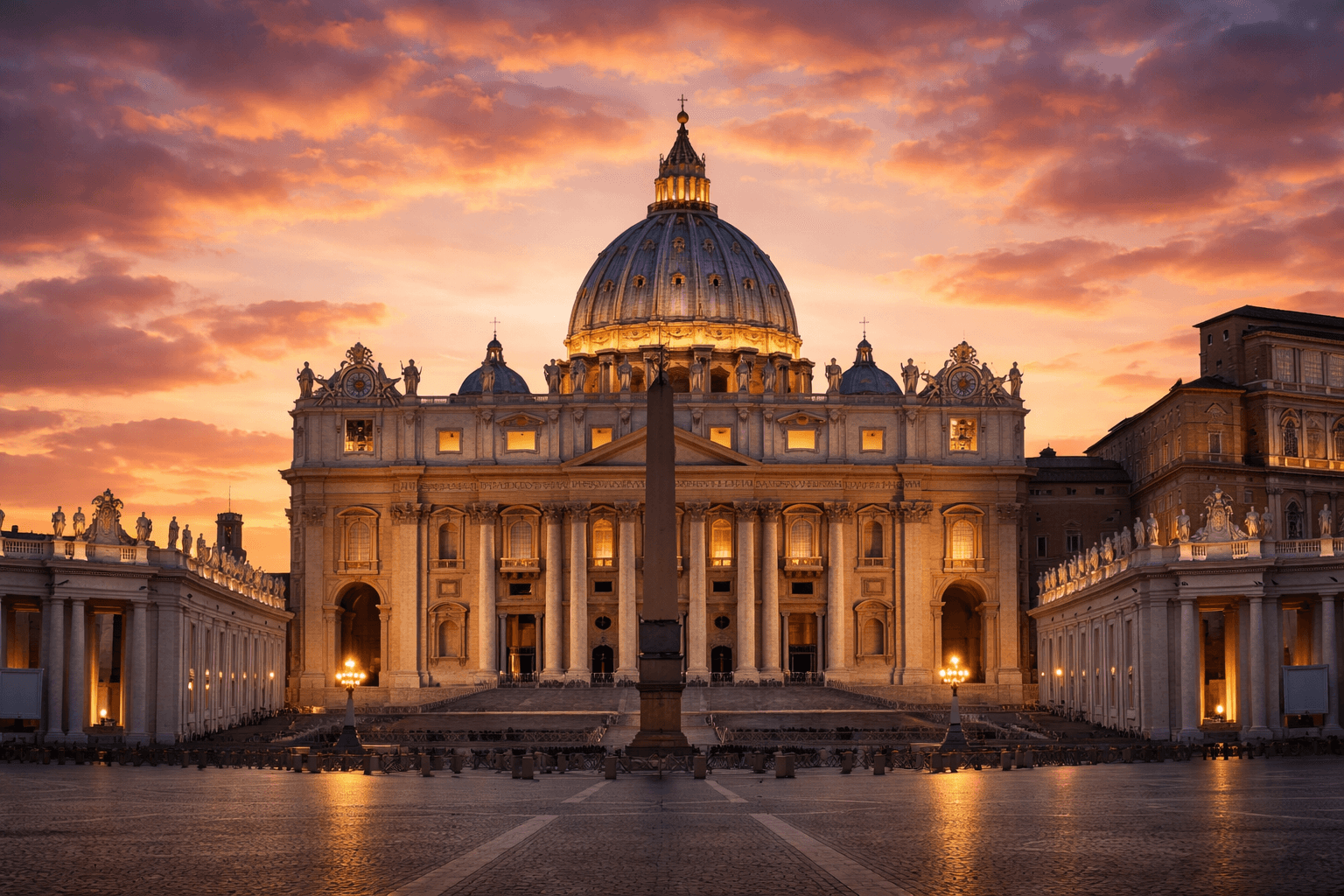
Michelangelo’s influence is especially notable because he redesigned the dome, transforming it into a symbol of Renaissance architecture and engineering. Over time, the basilica incorporated Baroque elements through Bernini’s additions, such as the magnificent piazza with its embracing colonnades. This layered architectural history shows how the basilica evolved not only structurally but also stylistically, blending different artistic movements to create its current iconic form.
Which iconic artworks and sculptures can be found inside the Basilica?
Inside Basilica di San Pietro, countless iconic artworks and sculptures attract art lovers and tourists alike. One of the most famous is Michelangelo’s Pietà, a marble sculpture depicting the Virgin Mary holding the dead body of Christ. This masterpiece is remarkable for its emotional intensity and intricate detail, carved when Michelangelo was only in his early twenties. It remains a highlight for many visitors, symbolizing both artistic genius and religious devotion.
Another notable artwork is Bernini’s Baldachin, a monumental bronze canopy above the papal altar. This sculpture not only marks the sacred altar but also highlights the grandeur of Baroque art. Additionally, the basilica houses numerous statues of saints, frescoes, and mosaics that narrate biblical stories and papal history. These treasures contribute to Basilica di San Pietro’s reputation as a living museum, where art serves spiritual and educational purposes.
St. Peter’s Basilica Guided Tour + Dome elevator and Papal Tombs | Reserved Entry
What practical tips should tourists know before visiting Basilica di San Pietro?
Tourists planning to visit Basilica di San Pietro should arrive early to avoid long queues, especially during peak tourist seasons. The basilica opens at 7 AM, and early access ensures a more serene experience, allowing visitors to enjoy the artworks and architecture without crowds. Moreover, visitors must dress modestly, covering shoulders and knees, as the basilica is a functioning place of worship, and this dress code is strictly enforced for entry.
Security checks are mandatory, so it is advisable to travel light and avoid carrying large bags to speed up the entry process. Another practical tip is to allocate at least two hours to explore the basilica fully, including climbing to the dome for panoramic views of Rome. Guided tours or audio guides are highly recommended because they provide insightful context and uncover many curiosities about Basilica di San Pietro that casual visitors might miss.
Why is the Dome of Basilica di San Pietro a marvel of engineering?
The dome of Basilica di San Pietro is a marvel of engineering due to its innovative double-shell structure and immense height. Designed by Michelangelo, the dome reaches approximately 136 meters, making it one of the tallest domes in the world. The double-shell technique means there are two layers of the dome, which provide stability and reduce weight, an advanced solution for the time. This design allowed the dome to withstand centuries of weather and seismic activity.
Additionally, the dome’s support system employs a series of ribs and buttresses that distribute the weight evenly, preventing collapse. Climbing the dome offers a firsthand appreciation of its complexity and the skill involved in its construction. Therefore, the dome is not only an architectural icon but also a testament to Renaissance ingenuity and the fusion of art with scientific principles.
What historical events and legends surround Basilica di San Pietro?
Basilica di San Pietro has been the stage for numerous historical events, including papal coronations, ecumenical councils, and significant religious ceremonies. One pivotal moment was the declaration of the dogma of the Immaculate Conception by Pope Pius IX in 1854 within its walls. The basilica also witnessed the Second Vatican Council (1962-1965), which profoundly influenced modern Catholicism. These events highlight the basilica’s role as a center for global religious leadership.
Legends about Basilica di San Pietro enrich its mystique, such as the tradition that Saint Peter’s bones lie beneath the high altar, verified by archaeological findings. Another legend concerns the obelisk in St. Peter’s Square, brought from Egypt and rumored to have witnessed martyrdoms. These stories, combined with the basilica’s spiritual and historical legacy, continue to captivate tourists and pilgrims, adding layers of meaning to their visit.
St. Peter’s Basilica Guided Tour + Dome elevator and Papal Tombs | Reserved Entry
FAQ about curiosities of Basilica di San Pietro
1. What is the uniqueness of St. Peter’s Square?
St. Peter’s Square is famous for its elliptical shape and the grand colonnades designed by Bernini, which symbolize the welcoming arms of the church. It also hosts the central Egyptian obelisk, which is a focal point for papal ceremonies.
2. Why is St. Peter’s Basilica famous?
It is famous as the burial site of Saint Peter, its Renaissance architecture, and its status as the spiritual center of the Catholic Church, hosting important religious and historical events.
3. hat are some curiosities about Rome connected to the basilica?
Rome’s connection includes the ancient Vatican Necropolis beneath the basilica and the transformation of the city through Renaissance and Baroque art visible in the basilica’s design.
4. How many popes are buried in St. Peter’s Basilica?
More than 90 popes are buried within the basilica, with Saint Peter’s tomb being the most significant and revered.
5. What is the legend of Saint Peter related to the basilica?
The legend states that Saint Peter was crucified upside down near the site where the basilica now stands, and his tomb lies beneath it, making the basilica a sacred pilgrimage site.