

Colosseum Dress Code: What to Wear, What Not to Bring, and Practical Tips
- 9 min read
Visiting Rome’s most famous landmark requires preparation — and the Colosseum dress code helps travelers stay comfortable, respectful, and ready for adventure. From choosing the right shoes to knowing what not to bring, understanding these simple rules ensures a smooth and enjoyable visit to the Eternal City’s ancient arena.
Is There a Dress Code for the Colosseum?
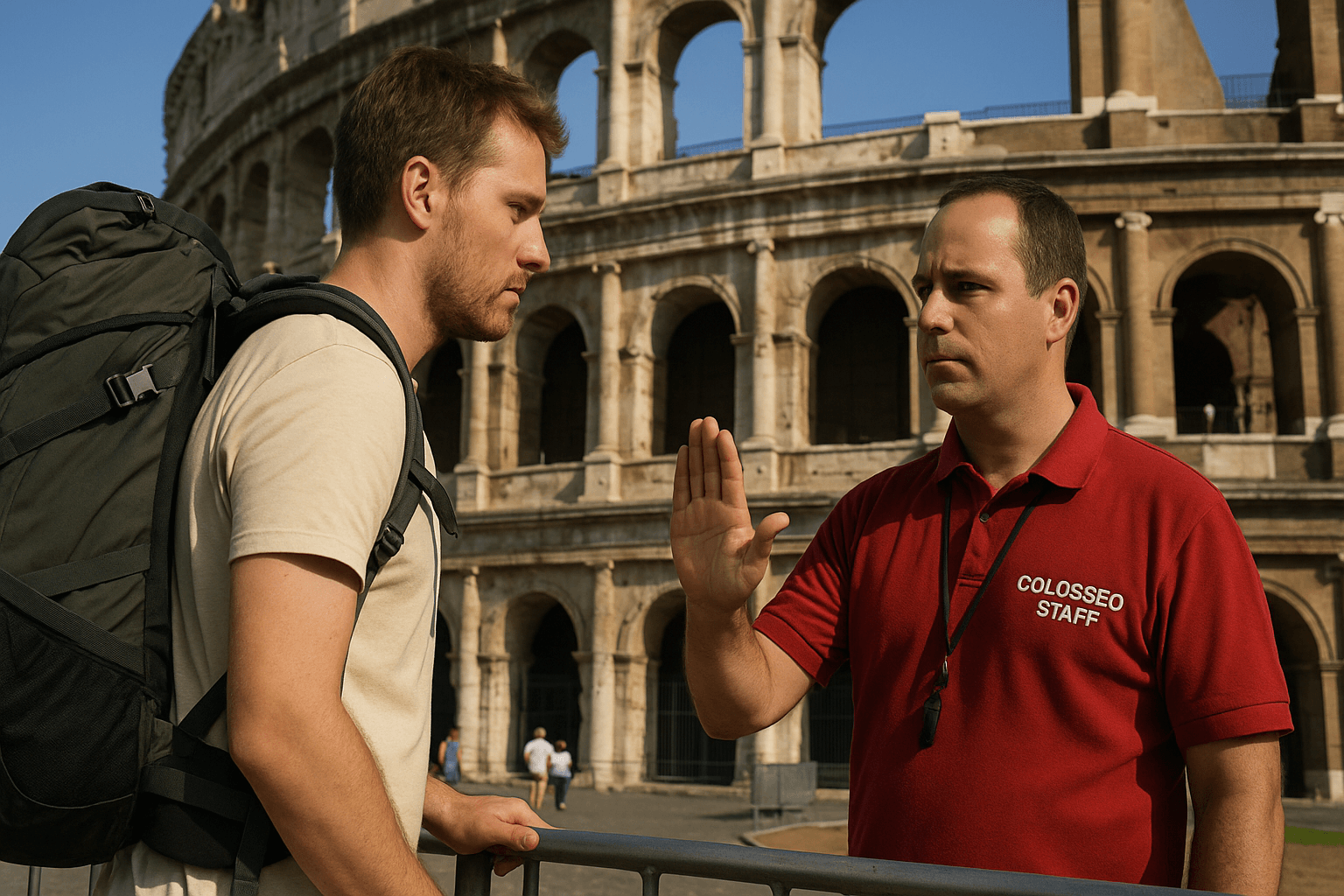
Although the Colosseum does not enforce a strict dress code, visitors are expected to dress sensibly. As a matter of fact, this ancient amphitheater welcomes millions of tourists each year, and practicality often outweighs formality. The Colosseum dress code exists mainly to ensure safety, comfort, and respect for the monument’s cultural importance.
Before entering, travelers should know that, although this may be true for most public attractions, the Colosseum differs from religious sites such as St. Peter’s Basilica. Consequently, modest clothing is not required; however, appropriate attire is recommended due to Rome’s weather and walking conditions. Another key point is that the site’s uneven floors and steep stairs make comfortable shoes essential.
As can be seen, most visitors spend hours under the Roman sun. Comparatively, those who plan to visit the Roman Forum or Palatine Hill on the same day must prepare for a longer walk under varying conditions. Altogether, dressing with functionality in mind ensures a smooth experience and helps prevent discomfort, dehydration, or fatigue.
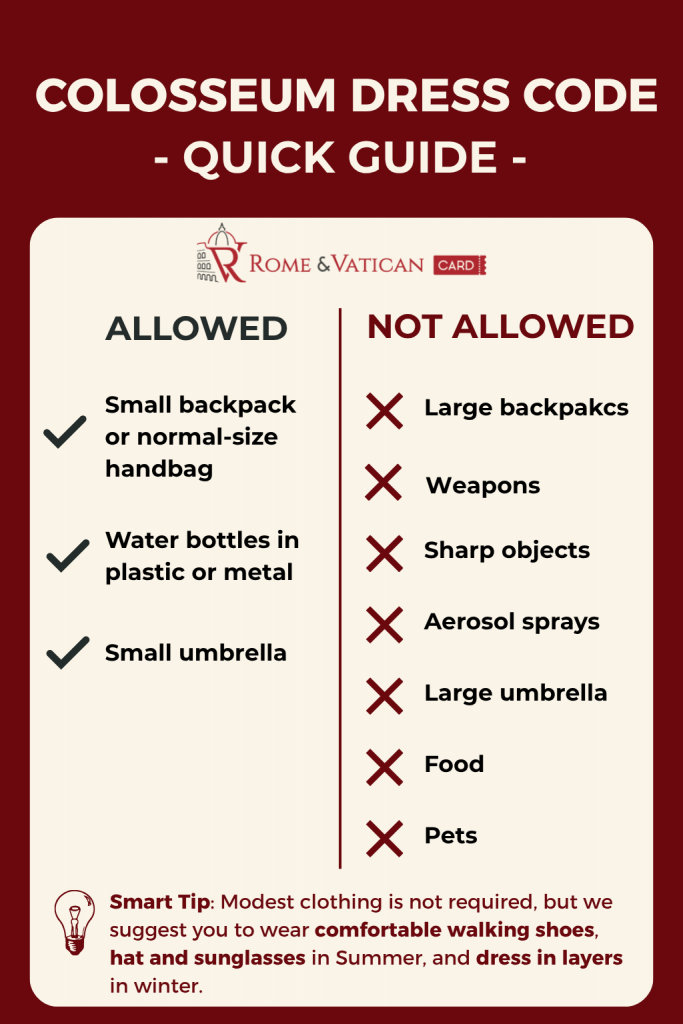
Colosseum Dress Code: Items Allowed Inside the Colosseum
1. Comfortable Walking Shoes
As shown above, exploring the Colosseum involves climbing ancient steps and standing for extended periods. Comfortable walking shoes are not just recommended — they are essential. Correspondingly, sandals or heels can cause slips or strain on the uneven cobblestones.
2. Small Backpack or Normal-Size Handbag
Although large bags are restricted, a small backpack or standard handbag is allowed. Basically, this item should fit under the seat and contain only the essentials — sunscreen, tickets, ID, and water.
3. Hat and Sunglasses in Summer
During the summer months, temperatures often exceed 35°C. Consequently, hats and sunglasses help prevent sunstroke. The Colosseum provides limited shade, especially in the central arena.
4. Dress in Layers in Winter
In winter, Rome can be surprisingly chilly. Dress in layers are recommended because temperatures fluctuate throughout the day. As a matter of fact, a light jacket and scarf usually suffice.
5. Water Bottles
Water is permitted inside, either in plastic or metal bottles. Despite strict rules about other containers, the Colosseum dress code allows visitors to stay hydrated. Water fountains are available on-site for refills.
6. Passport or ID Card
Visitors must bring valid identification, especially if their ticket includes discounts. At any rate, entry staff may verify the name on the ticket matches the ID.

Last entry Colosseum Guided Tour with Gladiator Arena Floor + rooftop aperitif
Colosseum Dress Code: What NOT to Bring to the Colosseum
Although this may be true for most tourist landmarks, the Colosseum enforces specific security rules. As long as visitors adhere to them, entry is smooth and stress-free.
- Large Bags, Backpacks, Suitcases, and Wheeled Bags – Security checks restrict oversized luggage for safety reasons.
- Glass Bottles and Containers – Glass poses a risk of breakage; plastic and metal are the only approved options.
- Food and Drinks – Meals are not allowed to protect the archaeological site.
- Weapons, Knives, Pocket Knives – All sharp or dangerous objects are strictly prohibited.
- Aerosol Sprays – Including deodorants and perfumes, which are flammable.
- Umbrellas – Pointed or large umbrellas are considered hazardous. Compact folding umbrellas may be permitted on rainy days.
- Pets – Only service animals are allowed entry.
As has been noted, these restrictions align with Italian safety regulations. Comparatively, they resemble security protocols at major airports and museums.
Dress Code for the Colosseum and Roman Forum
Because the Colosseum ticket includes access to the Roman Forum and Palatine Hill, the same Colosseum dress code applies to all three sites. As an illustration, the Forum’s uneven terrain and open layout mean comfortable shoes and sun protection are indispensable. Another key point: there are few shaded areas, so hats, sunglasses, and lightweight clothing are advisable.
Conversely, in winter, dress in layers and waterproof jackets help manage unpredictable rain. As soon as visitors cross from the Colosseum to the Forum, they will notice that the terrain is rougher and wind exposure higher. Therefore, dressing with practicality in mind enhances both comfort and the overall experience.

First entry Colosseum Guided Tour with Gladiator Arena + Ground and 1st Floor access
Colosseum Dress Code Tips
What NOT to Wear at the Colosseum
- High heels
- Flimsy sandals
- Strappy tops and jeans or shorts if visiting churches afterward
What You Should Wear at the Colosseum
- Comfortable walking shoes
- Breathable clothing during summer months
- Dress in layers during winter and fall months
Chiefly, dressing smartly ensures both style and comfort. Correspondingly, blending practicality with casual fashion reflects the spirit of the modern traveler in Rome.

Colosseum, Roman Forum and Palatine Hill Guided Tour + ancient Rome tour
Shade & Rest Areas at the Colosseum
Despite the Colosseum’s open structure, shaded zones and rest areas are available. Visitors can find relief under arches or near the perimeter walls. As has been noted, hydration stations are conveniently located, allowing refills for water bottles. Comparatively, the northern sections offer more shade during midday hours.
FAQs About the Colosseum Dress Code
Is there a dress code to enter the Colosseum?
Although there is no official uniform policy, the Colosseum dress code encourages practical and respectful attire. As a matter of fact, visitors are advised to wear light, breathable clothes in summer and layered outfits in winter. Comfortable footwear is essential due to the uneven ancient stone pathways.
What not to wear in the Colosseum?
As can be seen, high heels, slippery sandals, and overly revealing clothes are not ideal. Comparatively, heavy or dark fabrics can make walking under the Roman sun uncomfortable. Chiefly, the goal is to remain comfortable and appropriately dressed for a historic monument.
Colosseum can you bring backpack?
Yes, but only small backpacks are allowed. As shown above, large bags, wheeled luggage, or bulky backpacks are prohibited for security reasons. The Colosseum dress code permits compact bags that can pass through scanners easily.
Can I bring a water bottle to the Colosseum?
Certainly, water bottles are allowed. Because of the warm Roman climate, hydration is crucial. As I have said, plastic or metal bottles are permitted, while glass containers are not.
Can I take an umbrella into the Colosseum?
Although small folding umbrellas are generally accepted, large pointed ones are restricted. As a matter of fact, they can be considered dangerous objects. It is advisable to carry a compact, collapsible umbrella if rain is expected.
Can you wear shorts to the Colosseum in Rome?
Yes, tourists may wear shorts. However, if they plan to visit religious sites afterward, modesty is recommended. Comparatively, lightweight pants or knee-length shorts provide both comfort and cultural respect.
Can I wear flip-flops to the Colosseum?
Despite the casual Roman vibe, flip-flops are discouraged. As has been noted, the ancient flooring is uneven and slippery in certain areas. As a result, supportive walking shoes or sneakers are a safer and more practical choice.
Is there a bag size limit at the Colosseum?
Yes. As I have shown, only small and medium-sized bags are permitted. Suitcases, large backpacks, or any item exceeding 40x35x15 cm may be denied entry.
Are backpacks allowed in the Colosseum?
As noted earlier, small backpacks are fine, but large ones are restricted. Correspondingly, security staff inspect each bag at the entrance. To save time, travelers should carry essentials only.
What items are not allowed in the Colosseum?
Weapons, sharp objects, glass bottles, aerosol sprays, and large umbrellas are prohibited. As an illustration, the same rules apply to major Roman attractions like the Vatican Museums. Consequently, travelers should pack minimally to avoid delays.
Does the Colosseum have a clear bag policy?
Although it doesn’t enforce a strict “clear bag only” rule, the Colosseum dress code requires transparent scanning. Therefore, security officers may ask to inspect the contents of all bags. Using small, easily accessible bags speeds up the process.
Do you need your passport for the Colosseum?
Yes, identification is necessary for ticket verification. As a matter of fact, discounted or skip-the-line tickets often require a passport or national ID for confirmation. Comparatively, children or EU residents under certain age brackets may need to show ID for free entry.
Can I bring a metal water bottle to the Colosseum?
Yes, metal bottles are allowed, as long as they are not glass or overly large. As I have noted, filling stations are available both inside and outside the site.
Is it better to go to the Colosseum in the morning or afternoon?
As can be seen, mornings offer cooler temperatures and fewer crowds. However, afternoons provide softer light for photography. Correspondingly, it depends on visitor preference — early risers enjoy calm entry, while evening explorers benefit from stunning golden-hour views.
Can you bring water into the Colosseum?
Absolutely. Despite the security rules, water is permitted because hydration is essential under Rome’s heat. As long as the bottle is plastic or metal, there will be no issue during screening.
What shoes to wear to the Colosseum?
Comfortable walking shoes or sneakers are highly recommended. Altogether, the site requires several hours of walking and climbing. Comparatively, flimsy footwear can lead to fatigue or minor injuries.
What ID is needed for the Colosseum?
As has been noted, a passport or national ID card is mandatory for identification. Tickets must match the name on the document, especially for online bookings. At any rate, keeping the ID accessible ensures a faster check-in.
Can I wear anything to the Colosseum?
Not exactly. Although casual attire is acceptable, the Colosseum dress code encourages comfort, safety, and cultural awareness. Basically, visitors should avoid extremes — neither overly formal nor too revealing. Dressing smart-casual keeps the focus on the experience rather than the outfit.